


Victorian Test Mistakes That Cost You a Pass
A driving test can feel frustrating when you know how to drive but make one rushed decision under pressure. Many Victorian test mistakes are not about difficult manoeuvres. They happen in ordinary moments: leaving the kerb without checking properly, entering a roundabout too quickly, or waiting so long at an intersection that a safe gap disappears.
The good news is that these are skills you can practise. A driving test is designed to check whether you can make safe, legal and independent decisions in changing traffic conditions. It is not about being perfect or driving like you have been on the road for 20 years.
What the Victorian driving test is really checking
Your assessor is looking at the full picture of your driving. That includes observation, speed control, road position, signalling, gap selection and how you respond when traffic does something unexpected. A smooth drive helps, but safety comes first.
For example, a cautious driver is not automatically a safe driver if they hesitate unnecessarily at every give way sign. Equally, being decisive does not mean forcing your way into traffic. The aim is to recognise a safe opportunity, make a clear decision and carry it out with control.
You should also expect the test route to include everyday situations rather than only quiet back streets. Depending on the test centre and traffic at the time, this may mean busy intersections, roundabouts, shopping strips, lane changes, residential streets and a low-speed manoeuvre. Practise should reflect the conditions you may actually face.
Victorian test mistakes before the car even gets moving
A strong test begins before you leave the parking spot. Take a moment to settle the seat, mirrors and steering position so you can use the controls comfortably and see clearly. Rushing this stage can leave you distracted for the first few minutes of the drive.
Missing the observation routine
One of the most common Victorian test mistakes is relying on mirrors alone. Mirrors give useful information, but they do not show every area around the car. Before moving away from the kerb, changing lanes or moving back into traffic, use the appropriate mirror checks and a clear head check for the blind spot.
The key is to make your observation meaningful, not theatrical. Check at the time it matters, then move when the path is safe. Looking over your shoulder well before you begin a lane change and then drifting across later does not show that you have checked the space you are entering.
Forgetting that the car is already in traffic
Learners sometimes treat pulling away as a small task before the “real” drive begins. It is part of the drive. Check for cyclists, pedestrians stepping off the footpath, cars approaching from behind and vehicles opening doors near the kerb. Signal when required, select the right gear, release the handbrake properly and move away smoothly without rolling back.
If the car stalls, stay calm. Secure the vehicle, restart it and complete the same safety checks before moving off again. A stall is not automatically the end of a test. Panic, poor observation or creating a hazard is the bigger concern.
Mistakes that happen while driving
Driving at the wrong speed for the conditions
Speed errors are not limited to exceeding the posted limit. Travelling too fast for a narrow street, wet road, poor visibility or busy pedestrian area can be unsafe even when you are technically under the limit. On the other hand, travelling well below the limit without a reason can interrupt traffic flow and suggest uncertainty.
Build the habit of checking signs early and glancing at the speedometer regularly. Residential streets are especially easy to misread because the road may look wide and quiet. Watch for school zones, changed speed signs, roadworks and the end of a lower-speed area. Do not assume a limit has changed until you have seen the relevant sign.
Poor road position
Good positioning gives you time, space and visibility. On a straight road, keep a safe position within your lane rather than wandering towards parked cars or the centre line. When approaching a turn, position early and smoothly, without cutting across lanes or making sudden steering corrections.
Turning corners too wide is another frequent issue. A wide left turn can place you in the wrong part of the road, while cutting a right turn can put you into the path of oncoming traffic. Slow down before the turn, look where you want the car to go and steer through the corner with steady control.
Treating intersections as a memory test
At intersections, learners can become so focused on remembering the rule that they stop reading what is happening around them. Give way rules matter, but so do the road signs, lane markings, traffic lights, pedestrian crossings and the movement of other road users.
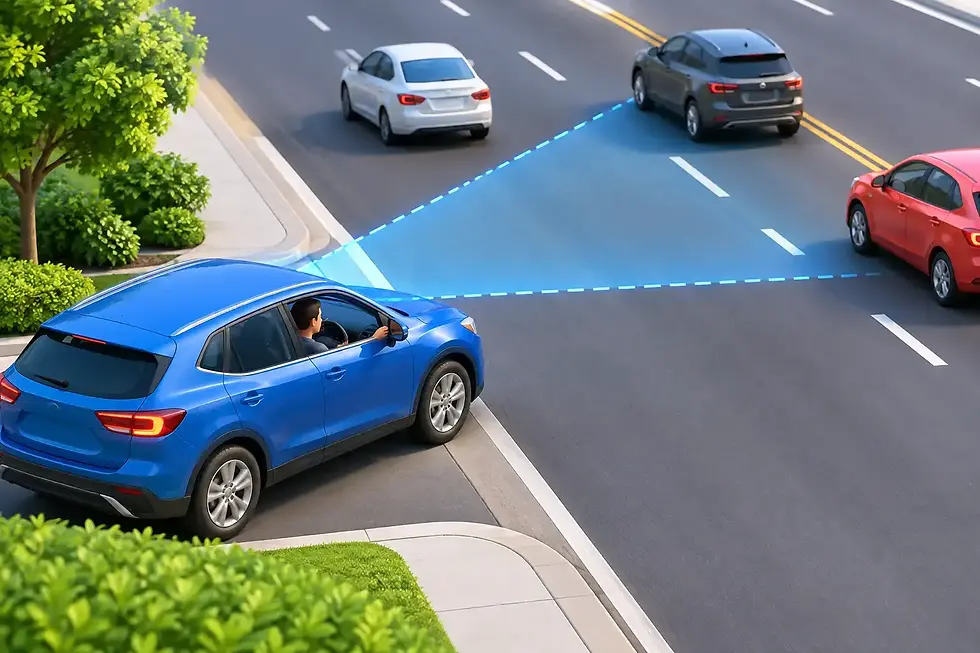
At a give way sign, reduce speed early enough to assess the situation. If your view is blocked by parked cars or vegetation, creep forward only when it is safe to do so. At a roundabout, choose the correct lane before entering, give way to traffic already in the roundabout when required and keep watching for vehicles that may not signal as expected.
Do not wave another driver through when you have the right of way unless it is clearly safe and necessary. Your job is to follow the road rules and make predictable choices, not manage every other driver’s decision.
Late signals and rushed lane changes
A signal should tell other road users what you intend to do before you act. Signalling halfway through a lane change or after you have begun turning gives people little useful warning. Plan ahead so you can check mirrors, signal, head check and move only when there is a safe gap.
If you miss a turn or cannot safely enter the lane you need, continue on. The assessor can redirect you. A wrong turn is usually far less serious than a sudden swerve, harsh braking or unsafe lane change.
Low-speed manoeuvres need patience, not speed
Three-point turns, reverse parking and other slow manoeuvres often make learners tense because every steering movement feels visible. The solution is not to hurry. Keep the car slow enough that you have time to observe, steer and correct safely.
Before reversing, check all around the vehicle and continue observing as you move. Reversing cameras can be useful support, but they do not replace direct observation. Look through the rear window where appropriate, use mirrors to judge position and remain alert for pedestrians, cyclists and cars entering the area.
Small corrections are normal. If your position is not right, stop, reassess and correct it safely. What matters is control and awareness of the space around the car. Mounting the kerb, striking an object or reversing without proper observation can create a much more serious problem than taking an extra moment to reset.
Let a small error stay small
Nerves can turn a minor mistake into several more. You may forget a signal cancellation, brake a little sharply or choose a turn too late. Notice it, correct it when safe and put your attention back on the road.
Avoid narrating the mistake, apologising repeatedly or trying to make up for it by driving faster. The next decision is always the one that matters most. Take a breath at the next safe opportunity, check your mirrors and return to your normal routine.
It also helps to practise with test-like instructions. Ask your supervising driver or instructor to give directions with enough notice, then focus on driving independently rather than waiting for prompts about every check and signal. If you need clarification about an instruction, ask early and calmly rather than guessing.
Practise the parts that challenge you
More driving hours are valuable, but targeted practise is often what builds test confidence. If roundabouts make you hesitate, practise several different ones. If you struggle with kerbside starts on hills, repeat them until your observations and clutch or brake control feel organised. If lane changes feel rushed, practise reading traffic earlier rather than only practising the final movement.
A professional lesson before the test can be particularly helpful when you are unsure what an assessor is looking for or have developed a habit you cannot spot yourself. At Yes Select Driving School, lessons can be tailored to the skills you need to work on, with test-day support available in an instructor’s dual-control vehicle if that arrangement suits you.
You do not need a faultless rehearsal to be ready. You need a safe routine that still works when the road is busy, the instruction is unfamiliar or your nerves show up. Give yourself time to practise those real situations, and let each lesson make your next drive feel a little more settled.


Comments