

How to Judge Intersection Gaps in Traffic
A clear-looking gap can disappear faster than you expect. At an intersection, the decision is not just whether a car is visible. It is whether you have enough time to move, clear the conflict area and settle safely into your lane without making another driver brake or change speed. Learning how to judge intersection gaps is one of the most valuable skills for both everyday driving and a Victorian driving test.
A good driver does not rush this decision. They read the road, check for the full picture and take the gap only when it genuinely suits their vehicle, their position and the conditions.
What makes a gap safe?
A safe gap is more than empty road between two vehicles. It gives you enough time to complete your movement at a normal, controlled pace. You should not need to accelerate harshly, hesitate halfway through or rely on approaching traffic to slow down for you.
Think about what your car has to do. Turning left from a side street may only require you to enter and build speed in the nearest lane. Turning right across oncoming traffic requires more time because you need to cross a lane, turn accurately and avoid cutting the corner. Crossing a multi-lane road or pulling out with passengers can also take longer than expected.
The gap you need changes with conditions. Wet roads, poor visibility, a steep hill, a busy shopping strip and an unfamiliar intersection all call for more space. If you are driving a larger vehicle or your car is stopped uphill, allow extra time to get moving smoothly.
Start with the road users you cannot ignore
Before assessing traffic gaps, make sure the intended path is clear. Check for pedestrians stepping off the kerb, cyclists travelling beside queued vehicles, motorcyclists filtering through traffic and cars that may be hidden by vans, buses or parked vehicles.
When turning left, do not focus only on vehicles approaching from your right. A pedestrian may be crossing the road you are entering, or a cyclist may be continuing straight through beside you. When turning right, keep watching oncoming traffic, but also check the road you are turning into. A safe opening can become unsafe if the destination lane is blocked.
At stop and give way signs, come to a complete stop where required and take the time to scan properly. Rolling forward slowly while searching for a gap can make it harder to see and harder for others to predict what you are doing.
How to judge intersection gaps without guessing
The best judgement comes from combining distance, speed and your own movement. Look at approaching vehicles and ask two simple questions: how quickly are they closing in, and how long will my manoeuvre take?
A vehicle that looks far away may be travelling at 70 km/h or more, particularly on a main road. Its distance will close much faster than a car moving through a slower local street. Watch it for a moment rather than making a decision from one quick glance. If it grows noticeably larger very quickly, it is closer than it first appeared.
Next, be realistic about your own car. From a standstill, you need time to release the brake, move off, steer through the turn and reach an appropriate speed. New drivers often underestimate this because they picture the car already travelling, rather than the full movement from stopped to safely established in the lane.
Do not use another driver’s indicator as your only reason to go. Indicators can be left on accidentally, used late or cancelled before the vehicle turns. Wait until the vehicle has clearly begun its turn and its path is no longer a risk. This is especially relevant at intersections with slip lanes, multiple turning options or busy shopping precincts.
Turning right across traffic
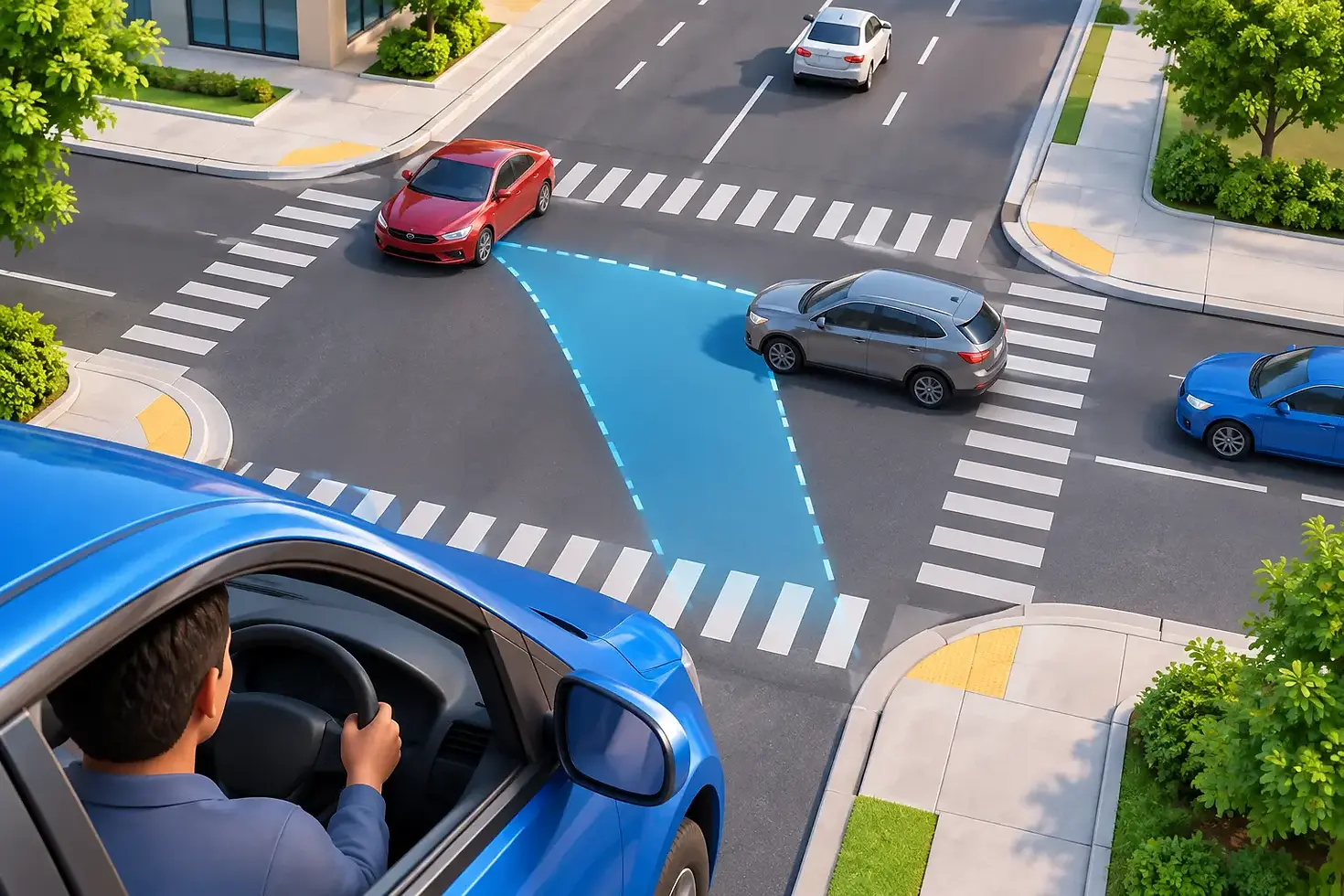
Right turns are where gap judgement is tested most clearly. You must give way to oncoming vehicles travelling straight ahead, turning left or making a U-turn where permitted. Even when you are waiting in the intersection to turn right, keep the wheels straight. If you are hit from behind, straight wheels reduce the chance of being pushed into oncoming traffic.
Choose a gap that lets you turn into the correct lane without rushing. Avoid cutting across the centre of the intersection or turning too widely into the wrong lane. If your view is blocked by an oncoming right-turning vehicle, do not assume the road behind it is clear. A vehicle travelling straight may be hidden from view.
If traffic is continuous, patience is the safe choice. You may need to wait for a green arrow, a larger break in traffic or for the lights to change. Waiting does not count against you in a driving test when the available gaps are unsafe. Taking a doubtful gap can.
Entering from a side street or driveway
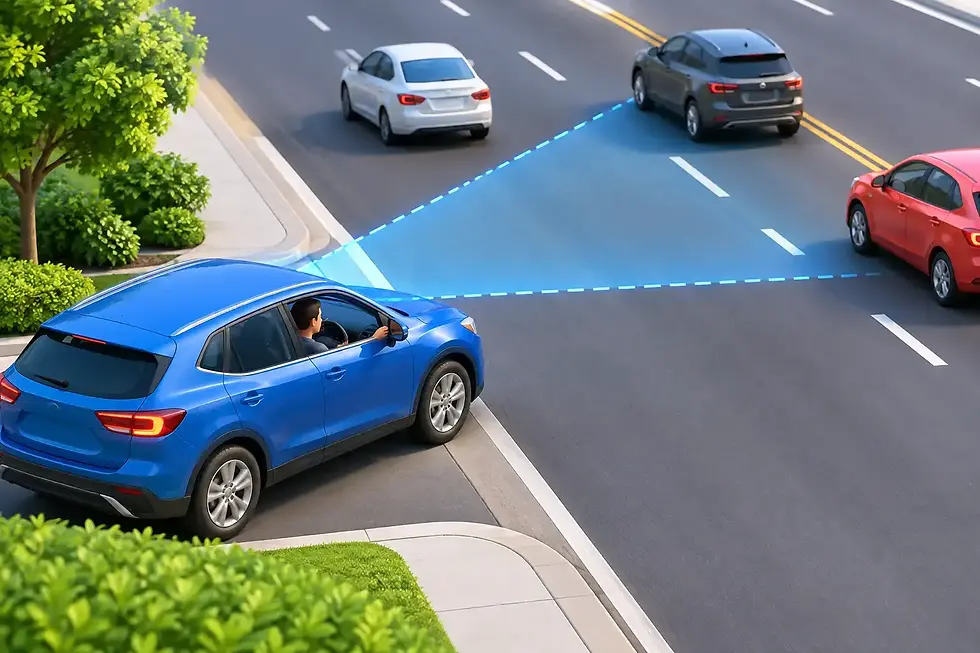
When entering a main road, identify the lane you need before moving. If you intend to turn left, look for a gap that lets you join without forcing the vehicle behind to brake. If you intend to turn right, you must assess traffic from both directions and make sure the roadway is clear enough for the entire crossing movement.
A common mistake is seeing one gap, starting to move, then stopping in the path of traffic because another lane is not clear. On a multi-lane road, wait until you can complete the movement safely. Do not pull into a painted median or traffic island unless it is designed as a safe refuge and there is room to wait without blocking traffic.
When your view is limited by parked cars, vegetation or a fence, edge forward only as far as necessary to improve vision. Keep scanning in both directions as each small movement changes what you can see. Never let the front of your car enter a traffic lane until you have judged the gap properly.
Why pressure from behind should not decide for you
Drivers behind may sit close, sound their horn or appear impatient. Their urgency does not make an unsafe gap safer. Your job is to make a legal, controlled decision based on what is happening ahead and around you.
This is particularly helpful to remember on a driving test. Examiners look for safe decision-making, not quick decision-making. Waiting briefly for a better opening shows awareness and control. Once you choose the gap, commit positively: move off smoothly, steer accurately and build speed to match the traffic conditions.
Practise gap judgement in stages
You do not need to begin with the busiest intersection in your area. Start by sitting at a quiet give way intersection with an experienced instructor or supervising driver. Watch the traffic and say aloud whether you would go or wait, and why. This helps turn a vague feeling into a clear decision process.
Then practise left turns into moderate traffic before moving to right turns across traffic, multi-lane roads and more complex signalised intersections. Repetition matters because every location has different sight lines, speeds and lane arrangements. A gap that feels comfortable on one road may be too small on another.
In Melbourne’s eastern and south-eastern suburbs, test routes can include busy arterial roads, suburban side streets and intersections where parked cars reduce visibility. Targeted practice near the test area can help you recognise the types of decisions you will need to make, while still building habits that work anywhere.
A simple routine before you move
At every intersection, pause long enough to check the whole scene: the road you are entering, approaching traffic, pedestrians, cyclists, lane space and your intended path. Decide whether you can complete the manoeuvre without anyone needing to react to you. If the answer is not clearly yes, wait.
Confidence behind the wheel is not about taking the first opportunity. It comes from recognising a safe one, acting decisively when it arrives and knowing that waiting for more room is always a sensible choice.


Comments