


Essential Pre Test Vehicle Checks for Learners
A driving test can feel like a big moment, especially when you have spent months building your hours and practising the skills. The good news is that essential pre test vehicle checks are straightforward. Taking a few minutes to check the car before you leave can prevent an avoidable problem, settle your nerves and let you focus on the driving.
Your test vehicle needs to be safe, legal and suitable for the conditions. Whether you are using your family car or an instructor’s vehicle, make these checks part of your normal routine rather than something you rush through in the car park.
Why pre-test vehicle checks matter
The driving test assesses how safely you manage the vehicle and the road around you. Before the test begins, the testing officer needs to be satisfied that the vehicle is roadworthy and that you can operate it safely. A warning light, bald tyre, cracked windscreen in your line of sight or faulty brake light can create unnecessary stress and may mean the test cannot go ahead.
More importantly, these checks are not just for test day. Safe drivers build the habit of noticing whether something has changed: a tyre looks low, the fuel gauge is close to empty, the windscreen is dirty or a light has stopped working. That awareness will help you well after you have your licence.
Essential pre test vehicle checks before leaving home
Start your checks early enough that you can fix a small issue or organise another car if needed. Aim to be ready before the time you need to leave, not at the exact moment you need to be on the road.
Tyres, wheels and number plates
Walk around the vehicle and look at all four tyres. They should appear properly inflated, without obvious cuts, bulges or severely worn tread. Do not rely only on how a tyre looks if you have concerns - use a tyre pressure gauge and follow the pressure shown on the vehicle’s tyre placard, usually found inside the driver’s door opening or fuel flap.
Tyres affect braking, steering and grip, particularly on wet Melbourne roads. If the steering has been pulling to one side, the car vibrates, or a tyre keeps losing pressure, have it checked before test day.
Make sure the number plates are fitted securely and can be read clearly. Remove anything that could cover them, including bike racks, dirt or decorative covers.
Lights, indicators and wipers
Switch on the headlights, parking lights and hazard lights. Check the front and rear indicators are flashing correctly. Ask someone to stand behind the vehicle while you press the brake pedal, or use reflections in a window where practical, to confirm the brake lights work.
Your reversing lights, rear number-plate light and high-mounted brake light should also be working. You may not need every light during the test, but a vehicle with working lights is part of being ready for the road.
Test the windscreen wipers and washers as well. A clean windscreen gives you a clear view of pedestrians, cyclists, signs and traffic lights. If rain is possible, check the wipers do not smear badly and that the washer bottle has fluid. In colder or wet weather, allow extra time to clear fog from the windows before you start driving.
Windscreen, mirrors and visibility
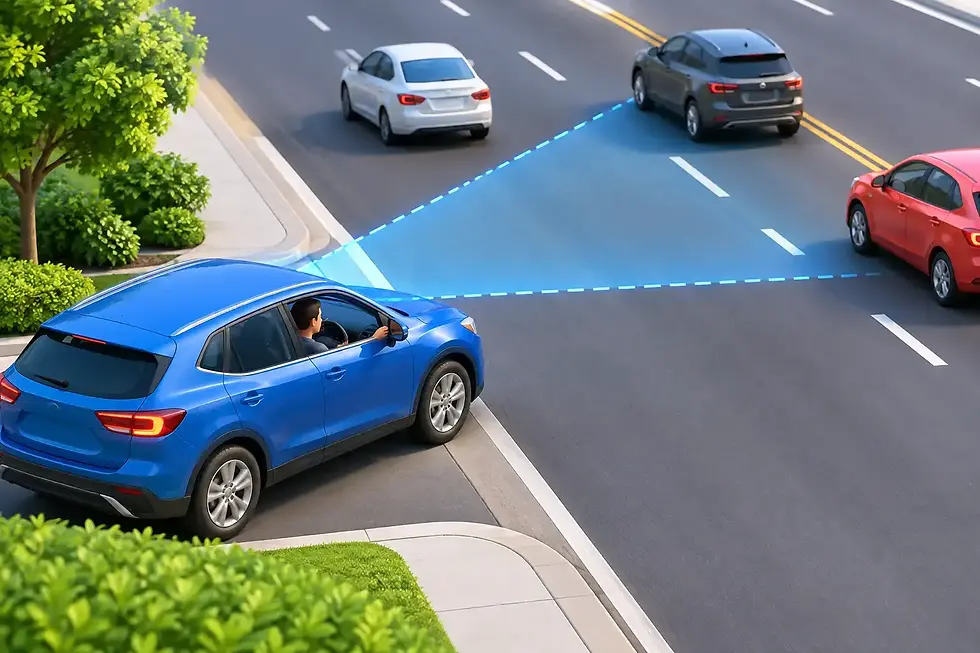
Look for cracks, major chips or damage that obstructs your view through the windscreen. Clear all windows of condensation and make sure your rear-view mirror and side mirrors are clean.
Before moving off, adjust the driver’s seat so you can press the pedals fully and sit comfortably upright. Set the head restraint at a suitable height, then adjust the rear-view and side mirrors. You should be able to check traffic without stretching, twisting or taking your attention away from the road for too long.
Avoid placing loose items on the dashboard or rear parcel shelf. They can slide around, block visibility or become distractions under braking.
Fuel, dashboard warnings and basic controls
Have enough fuel for the drive to the test centre, the test itself and the trip home. Arriving with the fuel warning light on is an easy way to add pressure to an already busy morning. For electric vehicles, make sure there is a comfortable amount of charge and that you understand the vehicle’s range.
When you start the car, watch the dashboard. Warning lights may briefly appear, then go out. If a warning remains on, particularly for brakes, airbags, engine temperature or oil pressure, do not assume it will be fine. Seek advice and use another suitable vehicle if necessary.
Check that the horn works, the demisters operate and the handbrake or electronic parking brake releases and applies properly. You should also know where the indicators, headlights, wipers and hazard lights are. These are ordinary controls, but nerves can make simple tasks feel harder when you have not used them recently.
Set up the car for a calm test start
Once the vehicle is safe to use, make it comfortable for you. Your footwear should allow you to feel and control the pedals properly. Thongs, loose slides and very bulky shoes can make smooth braking more difficult. Choose secure, flat shoes that you have driven in before.
Put your mobile on silent and away. There is no need for music, navigation prompts or last-minute messages during the test. If you need directions to the test centre, set them before you leave and stop safely if you need to check anything later.
If you are using a manual vehicle, take a moment to confirm you can select each gear cleanly and that you are comfortable finding reverse. If you are using an automatic, know the location of park, reverse, neutral and drive, and understand whether the car has features such as auto hold or a foot-operated parking brake. There is no advantage in choosing a vehicle that feels unfamiliar just because it is newer or larger.
Check the vehicle you will actually use
A common mistake is practising in one car and turning up for the test in another. The different bite point, brake sensitivity, mirror position, reversing camera or steering feel can throw you off.
If possible, practise in the same vehicle you plan to use. Get comfortable with its turning circle, blind spots, parking brake and controls. If you are using an instructor’s vehicle for the test, ask for a lesson beforehand so the vehicle feels familiar. A professionally equipped training vehicle with dual controls and a reversing camera can be reassuring, but you still need to show safe observation, speed control and decision-making yourself.
For learners in Melbourne’s eastern and south-eastern suburbs, a test-preparation lesson can also help you practise these checks as part of your normal pre-drive routine. Yes Select Driving School can provide test-day vehicle support where suitable, so you are not relying on a car you have barely driven.
Do not leave problems for the morning of the test
Some issues cannot be solved quickly in a test-centre car park. A tyre with low tread, a warning light, an expired registration or a broken light needs attention beforehand. Check your registration and make sure the vehicle is insured and legally roadworthy. If you are borrowing a car, speak with the owner several days ahead rather than assuming it will be available and ready.
Weather can also change your plan. Heavy rain, fog or a very hot day may affect visibility, tyre grip and your own comfort. Check the forecast, leave earlier than usual and bring water if conditions are warm. Being early gives you time to settle, use the bathroom and take a few steady breaths without rushing.
A simple routine worth keeping
You do not need to turn every drive into a mechanical inspection. A quick walk-around, clear windows, working controls and enough fuel are often all that is needed. For test day, give yourself extra time for a more careful check and deal with any concern early.
That routine is one of the quiet signs of a capable driver: you are not merely hoping the car is ready. You have checked, adjusted, and given yourself the best chance to drive with a clear head.


Comments