


How to Approach School Zones Safely in Melbourne
A school zone can change from a normal suburban street to a busy, unpredictable space in seconds. Learning how to approach school zones well is not just about slowing down for a driving test. It is about recognising that children may step out between parked cars, cross unexpectedly or focus on friends instead of traffic.
For learner drivers, these areas can feel pressured. There may be cars stopping, parents doing quick drop-offs, cyclists, crossing supervisors and drivers behind you who seem impatient. The safest response is calm, early planning. Give yourself time, read the signs and accept that arriving a few seconds later is far better than making a rushed decision.
How to approach school zones before you enter
Start looking well ahead as you travel along roads near schools. School-zone signs are usually placed before the lower speed limit begins, giving you time to check the active times and adjust your speed smoothly. In Victoria, many school zones have a 40 km/h limit during the times shown on the signs, but you must always follow the signs at the location rather than assuming every school operates the same way.
As soon as you see a school-zone sign, ease off the accelerator and begin reducing speed early. If needed, brake gently and progressively. Sudden braking can surprise the driver behind you, while leaving it too late can mean entering the zone above the posted limit. A smooth approach shows control and gives you more time to observe what is happening ahead.
Check your rear-view mirror before braking, then keep your eyes moving between the road ahead, side streets, parked vehicles and footpaths. You are not looking for one single hazard. You are building a full picture of the area.
Avoid trying to read a mobile notification, adjust music or continue a complicated conversation as you approach a school. Even a brief distraction can take your attention away at the moment a child steps towards the road. Set up navigation before leaving, and if something needs your attention, wait until you are safely parked.
Slow down for the environment, not only the sign
The posted speed limit is the maximum permitted speed, not a target you must reach. A signed 40 km/h school zone may still require a slower speed if visibility is poor, vehicles are double-parked or children are close to the road.
This is especially true around morning drop-off and afternoon pick-up times. Cars may pull away from kerbs without warning. A passenger door may open. A child may walk out from the front of a parked SUV where you cannot see them until the last moment. Rain, glare from low sun and a wet road surface all increase the stopping distance you need.
Keep a safe gap from the vehicle in front. Do not follow closely because you feel pressure from traffic behind. If the car ahead slows to allow a child to cross, you need enough room to respond without harsh braking. Being patient is part of safe driving, even when the traffic is moving slowly.
Watch crossings closely
School crossings deserve your full attention. Look early for the crossing signs, painted markings, flashing lights where provided and the crossing supervisor. Reduce speed before the crossing so you are ready to stop, rather than braking only after someone has stepped onto the road.
At a children’s crossing, be prepared for children who may hesitate, turn back to speak to a friend or run across after looking one way. Wait until pedestrians have cleared the crossing and it is safe to continue. Do not edge forward to encourage people to hurry. Give them space and let the crossing supervisor manage the movement.
Also be alert near pedestrian crossings without a supervisor, particularly when parked cars block your view. Scan both footpaths as you approach. A child on a scooter or bicycle can appear much faster than a walking pedestrian.
When turning at an intersection near a school, check again for people crossing the road you are entering. Learners sometimes focus so strongly on turning position and steering that they miss a pedestrian near the corner. Slow the turn, look through the intersection and do not rush because another vehicle is waiting behind you.
Manage parked cars and drop-off traffic
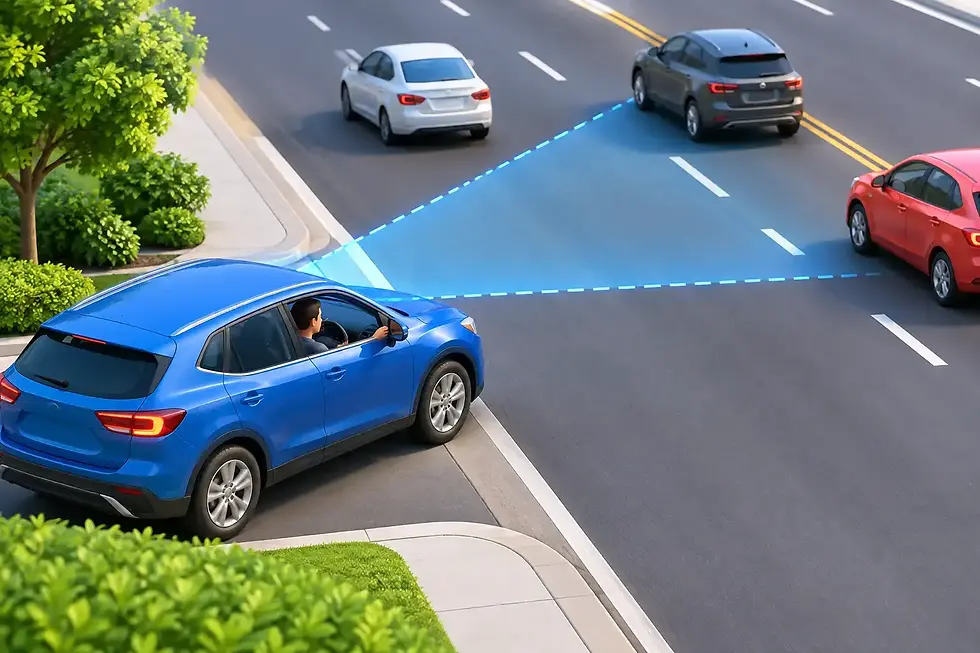
School streets often contain the hazards that make low-speed observation skills so valuable. Look for brake lights, reverse lights, indicators and wheels turning on parked vehicles. These clues can tell you that a car may pull out before it actually moves.
Keep a safe clearance from parked cars, but do not drift across the centre of the road to create extra room without checking for oncoming traffic. If the road is narrow, slow down and assess whether you need to give way to an approaching vehicle. Take turns where necessary rather than trying to squeeze through.
Never stop in a no stopping area, on a pedestrian crossing or where signs prohibit it. These restrictions are there to keep sight lines clear for children and drivers. If you are collecting a younger sibling or dropping someone off, plan a legal place to stop before you arrive. Walking a short distance is often safer than adding another vehicle to a congested school gate.
Be particularly careful when reversing. Reversing near schools is best avoided when possible because children can move behind your vehicle quickly and may be hidden from view. If you must reverse, go slowly, check all around the vehicle and use your mirrors and reversing camera as aids, not substitutes for direct observation.
What learner drivers should practise
A confident school-zone approach is a sequence of small skills working together: recognising signs, managing speed, checking mirrors, scanning for hazards and making calm decisions. Practise these skills regularly rather than treating school zones as something to think about only before the driving test.
During a supervised drive, ask your supervising driver to point out the first school-zone sign they see, then compare it with when you spotted it. Over time, aim to identify the signs early yourself. Talk through what you can see: a crossing ahead, a car with reverse lights, children near the kerb or a narrow section created by parked vehicles. This helps turn observation into a reliable habit.
It also helps to practise at different times. A school street at midday may be quiet, while the same road at 3.30 pm may require much slower, more careful driving. If you are preparing for a VicRoads test, your instructor can help you practise appropriate speed choice, observation and gap management in realistic suburban conditions.
Do not let impatient drivers rush you
You may occasionally have someone following too closely, sounding their horn or trying to pass. Their behaviour does not change your responsibility to follow the school-zone signs and drive to the conditions.
Stay focused ahead, maintain a safe and legal speed, and avoid reacting with sudden braking or gestures. If it is safe and legal to let a tailgating driver pass later, you can do so. But do not pull over in a restricted area or make an unsafe manoeuvre simply to get them around you.
A driving test assessor is looking for safe, independent judgement. More importantly, families and children around a school rely on every driver to make that same judgement. Taking a measured approach is not being overly cautious. It is reading the situation properly.
Building confidence one school zone at a time
If school zones make you nervous, start with quieter streets outside peak drop-off times and focus on your routine: see the sign, check mirrors, reduce speed, scan ahead and keep space around the car. As that routine becomes familiar, practise in busier conditions with an experienced supervisor or instructor.
At Yes Select Driving School, tailored lessons can focus on the situations you find difficult, whether that is busy crossings, narrow streets, parked cars or maintaining a safe speed under pressure. Confidence comes from repeated, guided practice, not from forcing yourself to rush.
The next time you see a school-zone sign, let it be your reminder to slow your thinking as well as your vehicle. A calm approach gives you the time and space to notice the person who needs you to notice them.


Comments