


Best Pre-Test Driving Skills for Test Day
A driving test is not won by one perfect reverse park. It is passed through a series of safe, steady decisions made from the moment you move away from the kerb. The best pre-test driving skills are the ones that help you show a VicRoads licence tester that you can manage normal road situations safely, independently and without being prompted.
For many learners, the difficult part is not learning the road rules. It is applying them while checking mirrors, watching for hazards, following directions and managing nerves at the same time. That is why the final lessons before your test should focus less on simply getting kilometres up and more on practising the skills that make your driving consistent.
Best pre-test driving skills to practise first
Observation that is visible and purposeful
Good observation is at the centre of safe driving. A tester needs to see that you are actively checking what is around you, rather than staring ahead and hoping the road stays clear.
Practise regular mirror checks before changing speed, position or direction. Check your centre mirror and relevant side mirror before braking firmly, turning, changing lanes or moving around parked cars. When you are leaving the kerb, merging, turning or changing lanes, make a clear head check of the blind spot as well.
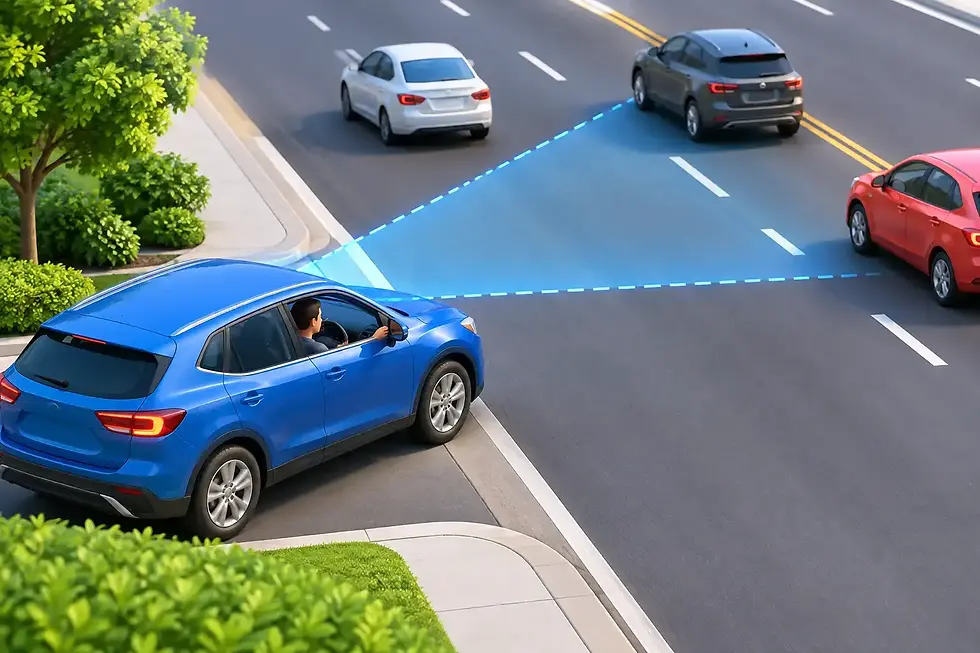
At intersections, scan early. Look for approaching vehicles, pedestrians near the footpath, cyclists, turning traffic and vehicles that may not give way correctly. You are not expected to predict every mistake another driver could make, but you should notice developing risks early enough to respond calmly.
A common test-day issue is looking too late. If you only begin checking when you reach an intersection or lane change point, you may feel rushed. Build the habit of looking well ahead and planning your next action before it becomes urgent.
Speed control for the conditions
Driving exactly at the signed speed limit is not always the safest choice. The right speed depends on visibility, parked cars, wet roads, narrow streets, traffic and the space available around your car.
You should be able to maintain a suitable speed without creeping over the limit or slowing down so much that you interrupt traffic unnecessarily. This takes practice, particularly in 40 km/h school zones, busy shopping strips and unfamiliar residential streets where speed signs can be easy to miss.
Smooth braking matters too. Aim to identify the need to slow down early, ease off the accelerator and brake progressively. Sudden braking can be necessary in a genuine hazard, but repeated sharp braking often shows that you are not scanning far enough ahead.
Road position and lane discipline
Test routes can include wide arterial roads, quiet side streets, roundabouts and lanes narrowed by parked vehicles. In each setting, your position should give you space, visibility and a clear intention to other road users.
Keep a sensible gap from parked cars in case a door opens or someone steps out. Stay centred in your lane where possible, and do not cut corners when turning. Before a turn, position the car in the correct lane early enough that you are not making last-second corrections.
When a street is too narrow for two vehicles to pass safely, slow down and assess who should give way. There is no prize for forcing your way through a gap. Waiting briefly and choosing a safe path is good judgement, not hesitation.
Intersections, give way rules and gap selection
Intersections test more than your knowledge of signs. They show whether you can judge gaps, wait when needed and move off safely when an opportunity is available.
At stop signs, come to a complete stop in the correct position, then look carefully before proceeding. At give way signs and roundabouts, reduce speed early and assess traffic before entering. Do not roll through because the road appears empty. A cyclist, pedestrian or approaching vehicle can be hidden until late.
Choosing gaps is where anxious learners can go two ways. Some pull out too early because they feel pressure from drivers behind them. Others wait through several safe opportunities because they are worried about making the wrong call. The goal is neither rushing nor over-waiting. With practice, you can learn what a safe, comfortable gap looks like for your vehicle and the road conditions.
Controlled manoeuvres without panic
Reverse parallel parking, three-point turns and kerbside stops are often the skills learners worry about most. They matter, but they are only part of the assessment. A small adjustment during a manoeuvre is usually better than continuing when the car is poorly positioned.
Set up slowly, check all around the vehicle and use accurate steering. Reversing cameras can help with positioning, but they do not replace mirror checks and looking through the rear window where appropriate. Before reversing, check for pedestrians, children, cyclists and vehicles approaching from either direction.
If you make a mistake, stay calm. Stop if it is safe, reassess and correct it. The important thing is that your correction is controlled and that you remain aware of surrounding traffic.
The pre-test driving skills that show sound judgement
A licence test is designed to assess safe driving, not your ability to memorise a route. You may be taken through familiar types of roads, but traffic, parked cars and pedestrians can change every day. Strong drivers respond to what is actually happening around them.
Responding to hazards early
A hazard is anything that could require you to change speed or direction. A ball rolling from between parked cars, a ute waiting to pull out, brake lights ahead, a pedestrian near a crossing or a car edging out of a driveway all deserve attention.
Practise identifying hazards well before you reach them. Ease off the accelerator, prepare your right foot near the brake when appropriate and leave enough space to react. This approach is safer than driving right up to a problem and then braking hard.
Keep a safe following distance, especially in wet weather or heavier traffic. If you cannot see far ahead because the vehicle in front is too close, increase the gap. Space gives you time to make better decisions.
Following directions while staying independent
During a test, the licence tester will provide directions, but you remain responsible for driving safely. If a direction cannot be completed legally or safely, do not force it. For example, if you are asked to turn but it is too late to move into the correct lane safely, continue ahead and explain when safe to do so.
Listen to directions, but do not let them distract you from signs, road markings and traffic. It is fine to ask for a direction to be repeated if you did not hear it. It is far better to clarify than to guess.
Handling nerves with a repeatable routine
Nerves are normal, including for learners who drive well in lessons. The answer is not trying to eliminate nerves completely. It is having a simple routine that keeps your attention on the next safe action.
Before moving off, adjust your seat and mirrors, secure your seatbelt, check that you can comfortably reach the pedals and take a slow breath. As you drive, quietly remind yourself of the basic sequence: look ahead, check mirrors, signal when needed, choose a safe position and keep a suitable speed.
Avoid cramming a long practice drive immediately before the test if it leaves you tired or overwhelmed. A focused warm-up lesson can be more useful, particularly if it covers the areas you tend to rush, such as head checks, roundabouts or parking.
Practise in conditions similar to your test
A learner who only practises on quiet streets may feel unsettled when traffic builds around them. Try to include different road environments in the weeks before your assessment: residential streets, busier main roads, roundabouts, traffic lights, shopping areas and roads with parked cars.
If your test is booked at a local VicRoads testing centre, it helps to become comfortable with the types of roads and traffic conditions near that area. This is not about memorising every turn. It is about learning to read local road layouts, school zones, changing speed limits and common intersection designs without becoming distracted.
For Melbourne learners, a tailored pre-test lesson can identify the one or two habits that need attention before test day. Yes Select Driving School can help learners practise in a dual-control vehicle, build confidence with test tasks and use an instructor's vehicle for the assessment where arranged.
The night before, make the practical details easy: confirm your booking time, bring the required identification, wear comfortable footwear and ensure you know how you will get there. On the day, give yourself time rather than arriving flustered.
Your test is one drive, but it is also the beginning of making safe decisions without an instructor beside you. Focus on being observant, patient and predictable. Those are the skills that will serve you long after the licence test is finished.


Comments