

Common Hazard Perception Mistakes to Avoid
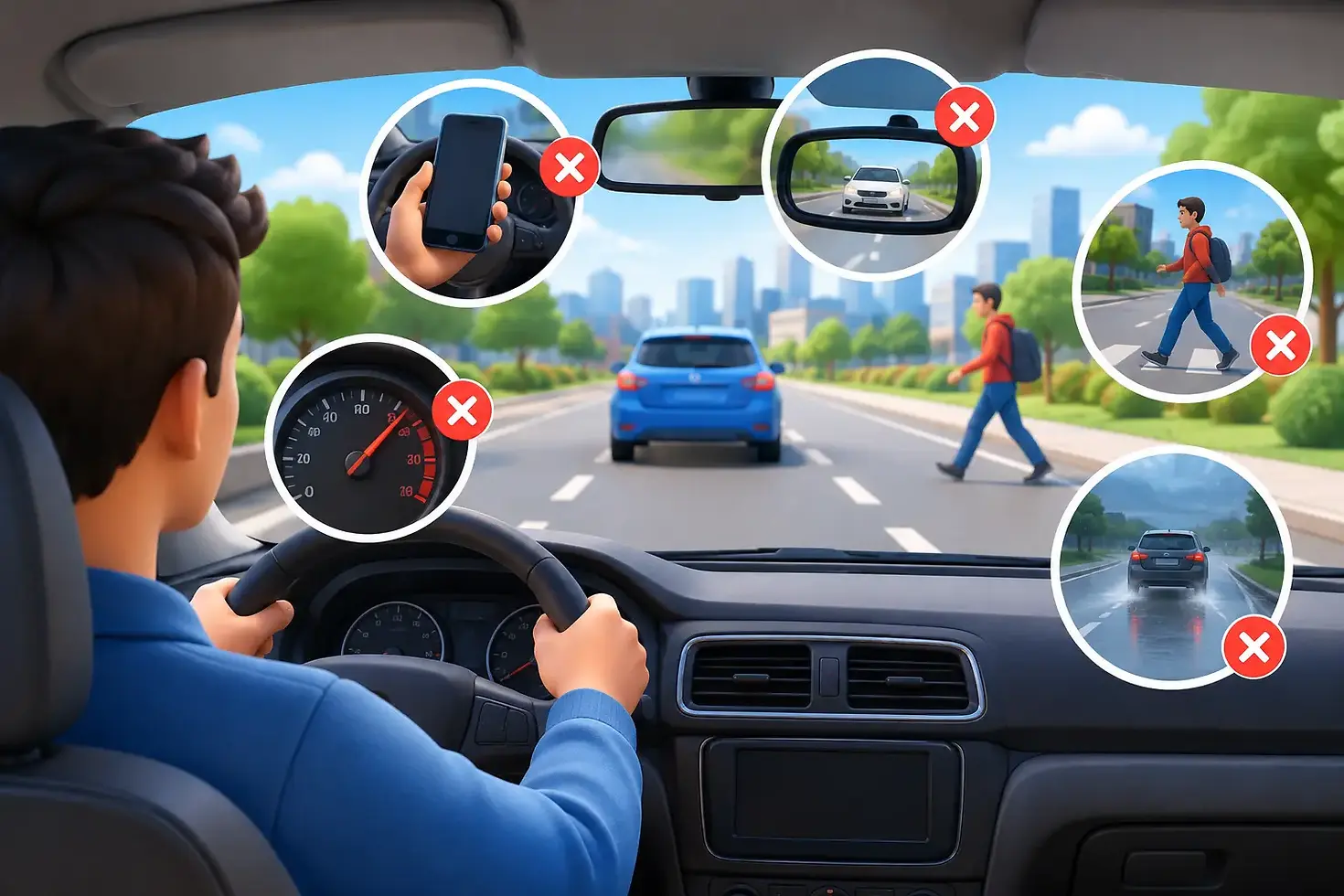
A quiet suburban street can look easy until a child steps out from between parked cars, a ute begins edging from a driveway, or the vehicle ahead slows unexpectedly. Common hazard perception mistakes happen when a learner sees what is on the road but does not recognise what may happen next. That difference matters in the Hazard Perception Test and, more importantly, every time you drive independently.
Hazard perception is not about assuming every road user will do the wrong thing. It is about scanning ahead, noticing changing situations and being ready to slow down, brake or create more space before a risk becomes urgent. With practice, this becomes less like a test technique and more like a safe driving habit.
What the Hazard Perception Test is really assessing
The test is designed to assess whether you can recognise a developing hazard - a situation that may require you to take action soon. You are not simply looking for hazards that already exist, such as a parked car or a pedestrian waiting safely on the footpath. You are watching for clues that the situation is changing.
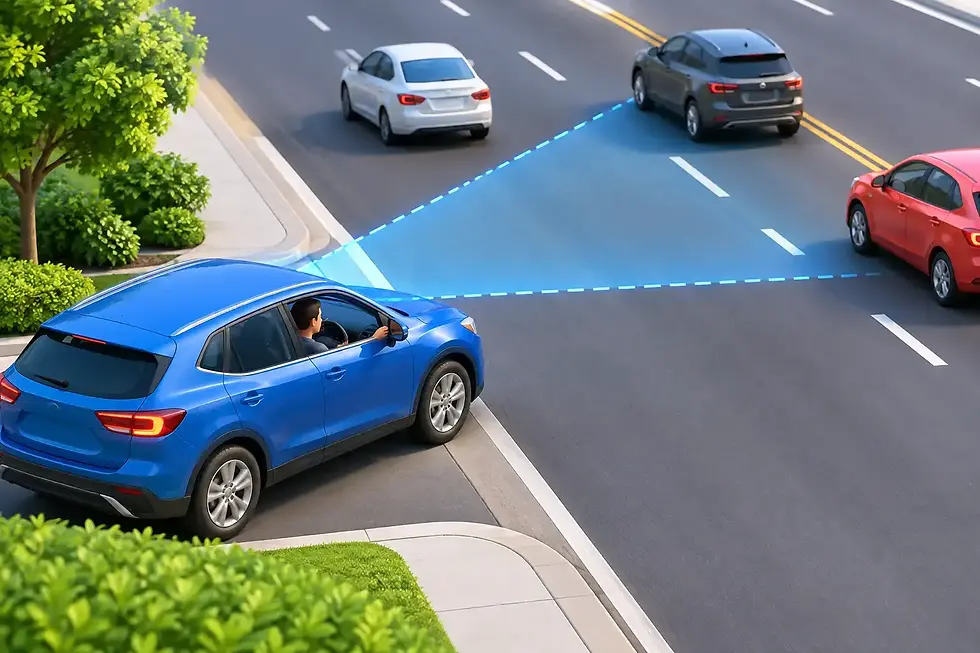
For example, a car waiting at a side street is not automatically a developing hazard. But if it begins to creep forward while your view is partly blocked, the risk has changed. A cyclist ahead is not necessarily a hazard either, but they may become one if a parked car narrows their space and they are likely to move out into your lane.
The challenge is judging the timing. Respond too early and you may be reacting before there is a genuine developing risk. Respond too late and you have missed the point at which a careful driver would have prepared to act.
Common hazard perception mistakes learners make
Watching the vehicle, not the situation around it
Many learners fix their attention on one vehicle, often the one directly ahead. It is sensible to monitor it, but safe drivers keep their eyes moving. Look beyond the vehicle in front, check both sides of the road and notice gaps, driveways, intersections and parked vehicles.
If the car ahead brakes suddenly, the reason may be visible further up the road: traffic queuing near lights, a turning vehicle, a pedestrian crossing or a bus pulling away from the kerb. Seeing the cause earlier gives you more time and reduces the need for harsh braking.
A useful habit is to ask yourself quietly, “What could change here?” Do not let this distract you from driving. It is simply a prompt to stay alert to the parts of the scene that are likely to move.
Clicking or responding at the first possible sign
Some learners understand that they should identify hazards, then become too eager. They respond as soon as they see a parked car, a cyclist or a vehicle waiting to turn. But the key is not the object itself. It is the moment when its movement or position means you may need to adjust your speed or path.
Take a vehicle waiting to turn right across your path. If it is stationary with plenty of room and a clear view, there may be no immediate need to respond. If it starts moving, its wheels turn, or oncoming traffic creates pressure for it to rush through a gap, then it may be developing into a risk.
This is one reason practice should focus on the “why”, not memorising a certain moment in a video. Road scenes vary. Good judgement comes from recognising the clues.
Waiting until the hazard is obvious
The opposite mistake is waiting for proof. A learner may wait until a pedestrian is already stepping onto the road or until a car has fully entered their lane. By then, the safe response may need to be sudden.
Look for early signals: brake lights ahead, front wheels beginning to turn, a driver’s vehicle inching forward, a person looking towards the road, or a ball rolling from behind a parked car. None of these signs guarantees a hazard. Together, or in the right location, they tell you to prepare.
This matters on Melbourne streets with frequent parked cars and busy shopping strips. Your view can be limited, so leave extra space and reduce speed when the road environment gives you less time to react.
Missing hazards hidden by parked cars and larger vehicles
A van, bus, truck or line of parked cars can hide people, cyclists and turning vehicles. Learners sometimes focus only on the visible obstruction and drive past too closely or too quickly.
Instead, treat restricted vision as a reason to build a safety margin. Slow down if needed, position your vehicle safely and expect that something may emerge. The same applies when approaching the side of a large vehicle at an intersection. You may not be able to see whether another road user is crossing in front of it.
You do not need to be fearful. You simply need to avoid driving as though the unseen area is empty.
Forgetting that intersections change quickly
Intersections create several possible conflicts at once. Vehicles may turn across your path, pedestrians may start crossing, cyclists may continue straight ahead, and traffic can stop suddenly when lights change.
A common mistake is to watch only the traffic light. Green does not mean every path through the intersection is clear. Continue scanning, especially for vehicles turning right, people crossing late and cars approaching from side streets.
When practising in an unfamiliar area, slow your thinking down before the intersection. Check the road signs, lane markings, traffic movement and spaces where someone could enter your path. This approach helps both in the test and during the practical driving test, where observation and decision-making are being assessed all the time.
Underestimating speed, distance and wet conditions
A hazard can develop faster than it appears on screen or from behind the wheel. This is particularly true when you are travelling faster, following too closely or driving in rain. Wet roads can reduce grip, and spray or low light can make brake lights and pedestrians harder to see.
Leave a larger following distance when conditions are poor. If the vehicle ahead brakes, that extra space gives you time to respond smoothly rather than panic. It also improves your view of the traffic ahead.
Experienced drivers can make this mistake too, particularly after returning to driving or moving from overseas. Victorian conditions may involve busy multilane roads, trams, school zones, narrow residential streets and unpredictable peak-hour traffic. Confidence is helpful, but it needs to be matched with observation and space.
How to practise better hazard awareness
When you practise with a supervising driver or instructor, choose a variety of roads rather than repeating only the same quiet route. Residential streets are useful for noticing pedestrians, parked cars and driveways. Main roads help you practise scanning ahead, reading traffic flow and responding to brake lights early. Shopping areas and intersections require patience and careful observation.
After a developing hazard, briefly talk through it when it is safe to do so. Ask what you noticed first, what clue suggested the risk might change, and what action gave you more time. This kind of reflection is far more useful than simply being told you were right or wrong.
It can also help to practise naming potential risks before they become urgent: “Car waiting at the driveway”, “pedestrian near the crossing”, “traffic slowing at the lights”. You are not calling every one of them a danger. You are training your eyes to find the information that supports a safe decision.
Preparing for the test without guessing
Before sitting the Hazard Perception Test, make sure you understand the current instructions and complete official practice material where available. Pay attention to what the question asks you to identify. Some scenarios involve responding to a vehicle entering your path, while others involve recognising a safe opportunity to turn or overtake.
Avoid treating it like a game of trying to predict the exact click point. Focus on the developing risk and the action a sensible driver would be preparing to take. If you practise this mindset consistently, your responses become calmer and more reliable.
A tailored driving lesson can be useful if you are unsure why a situation was hazardous or find yourself reacting late. A patient instructor can point out the clues you may be missing and help you build the scanning routine into real driving, not just test preparation.
The goal is not to spot danger everywhere. It is to give yourself enough time, enough space and enough information to make safe choices. Each time you notice a change earlier and respond smoothly, you are becoming the driver your future self will be glad to have on the road.


Comments